From Obese to Lean: My 40kg Weight Loss Journey
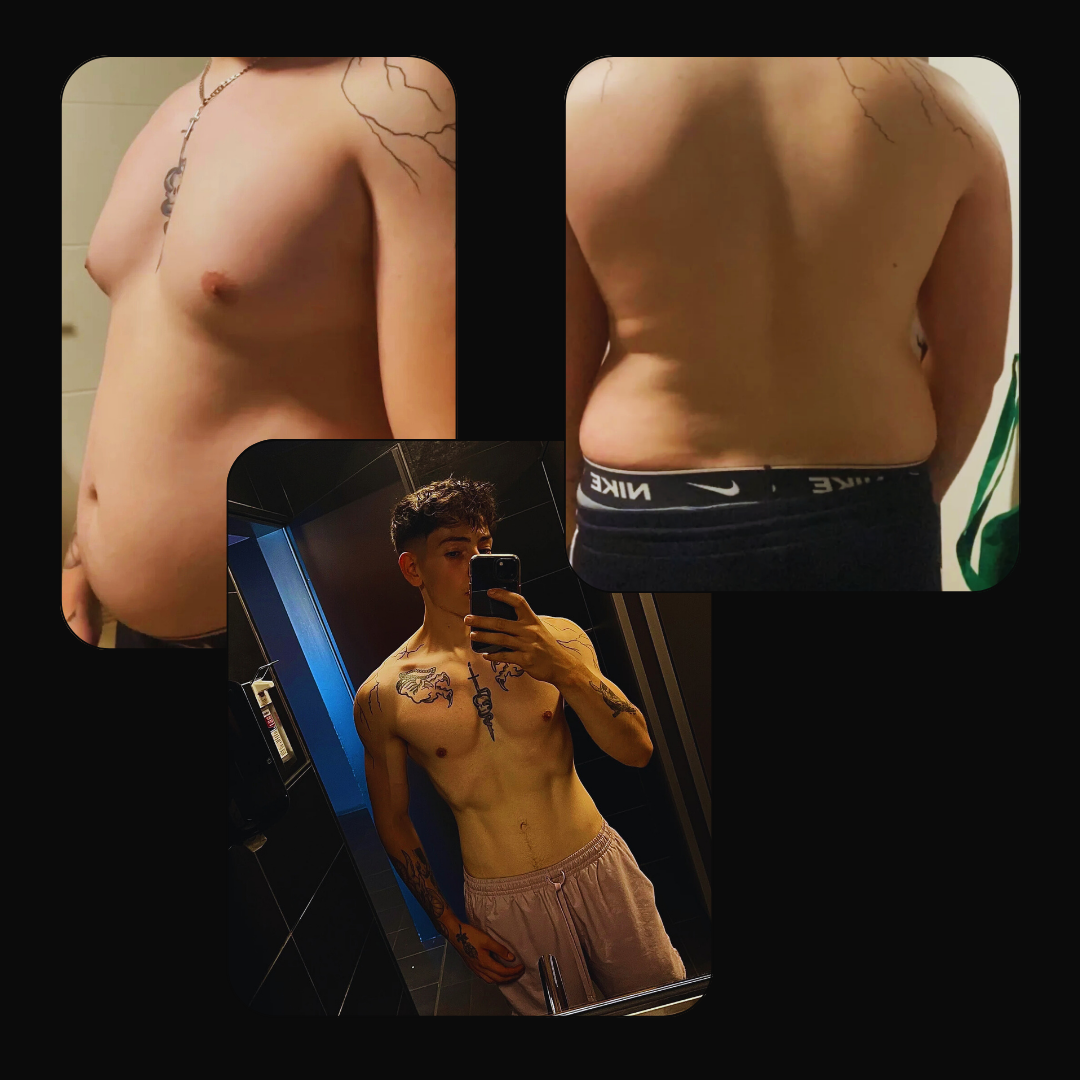
Today we're sitting down with someone whose transformation story is nothing short of remarkable. Over the course of their weight loss journey, they managed to drop an impressive 40 kilograms through a combination of disciplined nutrition, consistent daily movement, and dedicated strength training.
What makes this story particularly compelling is the methodical, science-based approach they took. Armed with knowledge about calorie deficits, progressive overload, and sustainable habit formation, they transformed their body while maintaining an aggressive 800 to 1000 calorie daily deficit, walking 10 to 17k steps consistently, and hitting the gym five times per week.
Perhaps most striking is the lack of loose skin despite the substantial weight loss, which they attribute to favorable genetics and their approach to the transformation. Now, having completed their cutting phase and gained valuable experience in hypertrophy training, they're preparing to embark on their first lean bulk—an exciting new chapter that will test their ability to shift from weight loss to muscle building.
Their story offers practical insights into high-volume eating strategies, creative ways to incorporate daily movement into a busy lifestyle, and the mental frameworks that enabled them to stay consistent through what was undoubtedly a challenging year-plus journey. This story is a masterclass in patience, precision, and the power of sustainable lifestyle changes.
Let's dive in!
What was your breaking point or moment of decision?
Honestly, there wasn't just one dramatic moment. It was more like a slow build-up of frustration and disappointment with myself that eventually reached a tipping point. But if I had to pinpoint when things really clicked, it was probably after seeing some photos from a family gathering. You know how sometimes you see yourself in pictures and think Do I really look like that? It hit me hard because I'd been avoiding mirrors and photos for so long that I'd convinced myself things weren't as bad as they were.
But beyond just the physical appearance, what really got to me was how limited I felt in everyday life. Simple things like climbing stairs without getting winded, fitting comfortably in airplane seats, or just having the energy to go out with friends—all of these had become genuine challenges. I was probably in my late teens or early twenties, and I realized I was living like someone decades older. That cognitive dissonance between my age and how I felt physically was unbearable.
The mental preparation phase was actually longer than I'd like to admit. I probably spent a good month or two just consuming content—watching transformation videos, reading r/loseit and r/fitness, learning about calorie deficits, TDEE calculators, and different training approaches. I think this "research phase" was crucial because by the time I actually started, I wasn't going in blind. I had a plan, I understood the science, and I knew what to expect.
What really helped me mentally was reframing the whole thing. Instead of thinking "I need to lose 40kg" which felt overwhelming and impossible, I focused on "I need to be in a deficit today" or "I need to hit my 10k steps today." Breaking it down into daily, achievable tasks made it feel manageable. I also told myself that this wasn't a temporary diet—this was a permanent lifestyle change. I wasn't going to do some extreme crash diet, lose the weight, and then go back to my old habits. I was going to learn how to eat properly, how to train properly, and build habits I could sustain forever.
I also mentally prepared for the fact that this would take time—probably a year or more. I accepted that from the start, which I think protected me from the frustration that causes a lot of people to quit after a few months when they haven't reached their goal weight yet. I knew I was in it for the long haul.
How did you structure your 1000 calorie deficit?
Okay, so let me be real. An 800 to 1000 calorie deficit is pretty aggressive, and I wouldn't necessarily recommend it to everyone. It worked for me because I had a lot of weight to lose and I was very diligent about tracking everything, but it's definitely on the more extreme end. For someone with less to lose, a smaller deficit would probably be more sustainable and healthier.
My TDEE when I started was probably around 2800-3200 calories depending on my activity level that day, so I was eating somewhere between 1800 to 2400 calories most days. As I lost weight, my TDEE decreased, so I had to adjust accordingly. By the end, I was probably eating 1600 to 2000 calories to maintain that same deficit.
Here's what a typical day looked like for me:
Breakfast (around 400 to 500 calories):
- Huge bowl of oatmeal (60 to 80g dry oats) with a sliced banana, some berries, cinnamon, and a tiny bit of honey
- Black coffee (I learned to love it without sugar or milk—zero calories!)
- Sometimes I'd add a scoop of protein powder to the oatmeal to bump up the protein
The key with breakfast was volume. Oatmeal expands in your stomach and keeps you full for hours. I could barely finish these bowls sometimes, and they were only 400-500 calories.
Lunch (around 500 to 600 calories):
- Massive chicken breast (200 to 250g) seasoned with whatever spices I was feeling
- Literally mountains of vegetables—broccoli, cauliflower, bell peppers, zucchini, whatever was on sale
- Either a medium potato (150 to 200g) or a serving of rice (cooked weight like 200g)
- Sometimes I'd make a huge salad with light dressing instead
The pattern here is: lean protein, tons of veggies, moderate carbs. The vegetables were crucial because you can eat SO MUCH of them for very few calories. Like, 300g of broccoli is only about 100 calories but it fills you up like crazy.
Dinner (around 600 to 800 calories): This is where I'd get a bit more creative and fit in some of my "cheat" meals that I mentioned. Some examples:
- Pasta (100g dry) with 200g chicken, tons of spinach, cherry tomatoes, and light cream cheese (like 50g). I'd cook the chicken and veggies, then mix in the cream cheese to make it creamy, add the pasta, and it genuinely felt like a indulgent meal even though it was only like 700 calories total.
- Homemade burrito bowl: rice, lean ground beef or turkey, black beans, salsa, tons of lettuce and peppers, a tiny bit of cheese and light sour cream
- Stir fry: chicken or shrimp, mountains of mixed vegetables, soy sauce and garlic, served over rice
- Sometimes just another variation of chicken/fish with potatoes and vegetables but prepared differently (grilled, baked, air-fried)
Snacks (200 to 400 calories spread throughout the day):
- Greek yogurt (the 0% fat kind) with some berries
- Protein shake if I was low on protein for the day
- Rice cakes with some light cream cheese or peanut butter (measured carefully)
- Fruit—apples, oranges, whatever was in season
- Sometimes sugar-free jello or low-calorie ice cream like Halo Top when I really needed something sweet
The key principles I followed:
- Protein was king: I aimed for at least 180-200g of protein per day. This helped preserve muscle mass during the cut and kept me feeling full. Lean chicken breast, turkey, fish, egg whites, Greek yogurt, and protein powder were my staples.
- Volume eating: I'd literally eat 500-800g of vegetables per day. They're so low in calories that you can eat massive portions and barely make a dent in your calorie budget. Plus, all that fiber keeps you full and helps with digestion.
- Strategic carbs: I didn't go low-carb, but I was smart about it. Potatoes are incredibly satiating for the calories (especially when you weigh them properly). Rice, oats, and pasta (in measured portions) were my main sources. I avoided calorie-dense carbs like bread and pastries most of the time because they didn't keep me full.
- Minimize liquid calories: No sugary drinks, no juice, no fancy coffees with tons of milk and syrup. Just water, black coffee, tea, and occasionally zero-calorie energy drinks. This alone probably saved me 300-500 calories per day.
- Weigh everything: I bought a cheap food scale and used it religiously. You'd be shocked how different your eyeballed "100g" of rice is from actual 100g. This precision was crucial for maintaining my deficit.
- Pre-log my food: Most days I'd plan my meals in the morning or even the night before. This way I knew exactly what I was eating, and there was no guesswork or risk of going over my calories.
I was really careful to get enough protein as I mentioned, but I also took a multivitamin just to cover my bases. I also made sure to include healthy fats—a bit of olive oil when cooking, some avocado occasionally, fatty fish like salmon once or twice a week—because you need fat for hormone production and overall health. I probably got 50-70g of fat per day.
The thing is, once you get used to eating this way, it honestly doesn't feel like deprivation. Those huge bowls of oatmeal, massive chicken and vegetable plates, and creative pasta dishes were genuinely satisfying. I was rarely hungry because I was eating such high-volume, filling foods. The deficit was aggressive in terms of numbers, but it didn't feel aggressive in terms of actual hunger and satisfaction.
You mentioned doing 10 to 17k steps daily. How did you fit that into your routine?
This is one of the questions I get asked the most because people assume 10-17k steps requires like hours of dedicated walking every day, but it's actually way more manageable than it sounds once you build the habits around it.
Morning routine (2,000 to 3,000 steps)
I'd wake up and within 30 minutes, I'd go for a 20-30 minute walk. Sometimes just around my neighborhood, sometimes to a nearby park. I'd do this in a fasted state before breakfast, just with some water and maybe black coffee. This walk served multiple purposes: it woke me up, it got me some morning sunlight (which apparently helps with circadian rhythm and mood), and it was a guaranteed 2 to 3k steps before my day even really started.
On unmotivated days, I'd tell myself "just 10 minutes" and I'd put on a podcast or some music. The thing is, once you're out there walking for 10 minutes, you might as well do 20 to 30. The hardest part is just getting out the door.
Getting to and around the gym (1,500 to 2,500 steps)
I didn't drive to the gym—I walked whenever possible. If it was too far, I'd get off the bus a stop or two early. Then at the gym itself, just moving between exercises, pacing during rest periods, walking to the locker room, etc., adds up. A typical gym session would easily get me another 1,500-2,000 steps without even trying.
Daily activities and errands (3,000 to 5,000 steps)
This is where lifestyle changes made a huge difference:
- I started taking stairs instead of elevators/escalators always
- If I needed something from a store, I'd walk there instead of driving if it was within 20 to 30 minutes
- I'd park far away from entrances instead of circling for the closest spot
- During lunch breaks or study breaks, I'd go for a 10-15 minute walk instead of scrolling on my phone
- I'd pace while on phone calls
- I'd walk to meet friends instead of meeting at a location
These little decisions throughout the day would easily accumulate 3-5k steps without feeling like dedicated exercise.
Evening walk (3,000 to 5,000 steps)
This was my secret weapon for hitting the higher end of my step range. After dinner, usually around an hour after eating, I'd go for another 30 to 45 minute walk. This became almost meditative for m. Time to decompress, listen to music or podcasts, think about my day, maybe call a friend.
On days when I was close to my goal but not quite there (like at 8k steps at 9pm), I'd just put on a show or YouTube video on my phone and walk around my room or outside until I hit my target. It sounds silly, but pacing while watching something makes the time pass quickly.
Weekends and high-step days (15k to 17k steps)
On weekends or days off, hitting the higher numbers was much easier:
- I'd go for longer walks in nature or exploring new areas of the city (easily 5-7k steps in one go)
- I'd meet friends for "walk and talk" sessions instead of sitting at a café
- I'd do active things like hiking, playing sports, or going to markets/festivals
- Sometimes I'd literally just decide to walk somewhere that would normally take a bus—like a 45 to 60 minute walk to a destination
Strategies for unmotivated or busy days
- The non-negotiable morning walk: Even on my worst days, I'd do at least a 15-minute morning walk. This almost always guaranteed I'd hit at least 10k by the end of the day because it set the tone.
- Podcasts and audiobooks: I have a huge list of podcasts I'm interested in, but I only let myself listen to them while walking. This created an incentive—if I wanted to know what happened next in that true crime podcast or learn more about that topic, I had to walk.
- Step competitions with friends: Some of my friends were also into fitness, so we'd have friendly competitions about who could get the most steps in a week. The competitive aspect made it fun.
- Tracking everything: I wore a fitness watch that tracked my steps in real-time. Being able to check my progress throughout the day and see that number go up was oddly satisfying and motivating.
- The "might as well" mentality: If I was at 8k steps and it was evening, I'd think "I'm already at 8k, might as well push to 10k." Once you're most of the way there, finishing feels more achievable.
- Walking as transportation: I genuinely started to prefer walking to places within 30 minutes distance. It saved money on transport, gave me exercise, and I discovered parts of my area I'd never seen before.
The honest truth about difficult days
Were there days I didn't hit my goal? Yes, definitely. Maybe once or twice a week I'd only hit 7 to 8k steps. I'd have rest days, or I'd be genuinely busy or tired, or the weather would be terrible. And you know what? That's fine. I didn't beat myself up about it. The goal was consistency over perfection.
But here's the thing: on those lower-step days, I'd usually make sure to hit my calorie target more precisely, and then the next day I'd push a bit harder. Maybe do 12 to 13k to balance it out mentally. It's about the overall trend, not perfecting every single day.
After a few months, hitting 10k steps stopped feeling like a challenge and started feeling like just... what I do. It became as automatic as brushing my teeth. My body actually started craving that movement. On days when I was sedentary, I'd feel restless and uncomfortable.
The steps weren't just about burning extra calories (though that helped—probably an extra 300 to 500 calories per day depending on the step count). They were about building an active lifestyle, improving my cardiovascular health, giving me time to think and decompress, and honestly just making me feel more energized and alive.
Plus, those steps added up over time. If you average 12k steps per day for a year, that's over 4 million steps. That's roughly 3,000 kilometers of walking. The cumulative effect is insane when you think about it that way.